Learn and live wild smart

We believe that knowledge is power and the more our community understands, the safer it becomes for both people and wildlife.

Explore our collection of resources to learn how to live wild smart and stay connected with the latest updates.

Articles

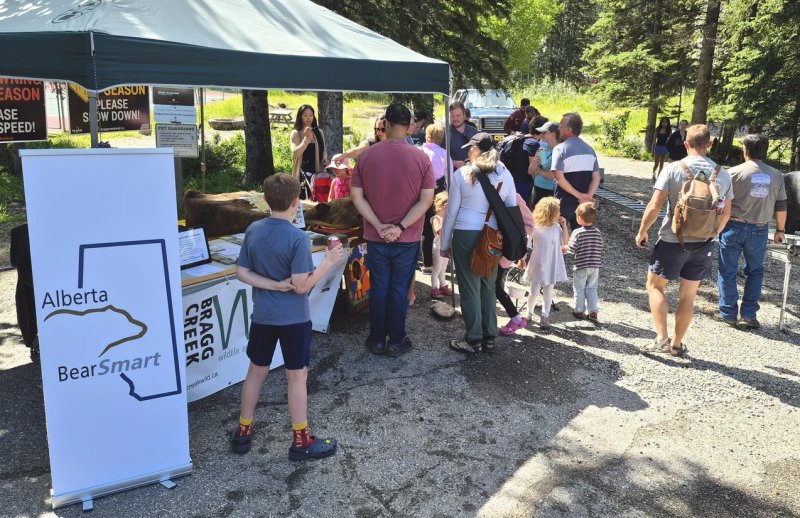
Read real stories from the Bragg Creek community from wildlife sightings and conservation wins to practical tips for co-existing with our wild neighbours.

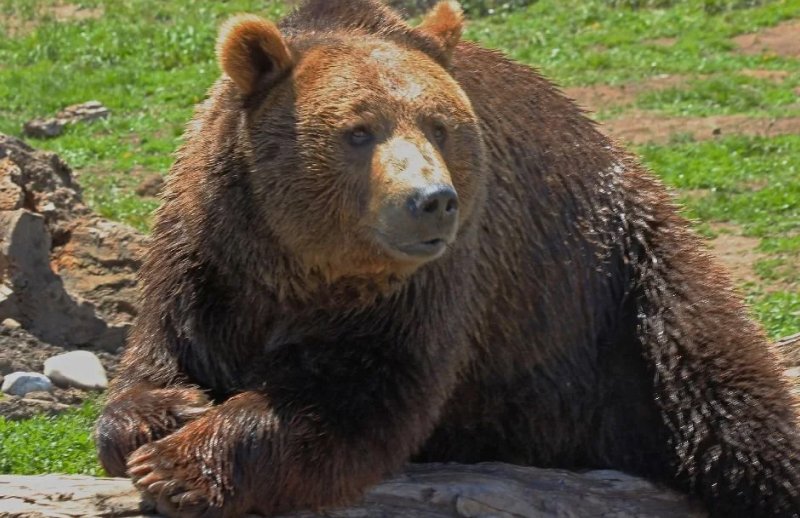
Living in Grizzly Country: Why Coexistence Matters

As human- populated forest communities continue to develop and attract more people to explore the nearby woods, the question is not whether grizzlies belong here (because they do), but

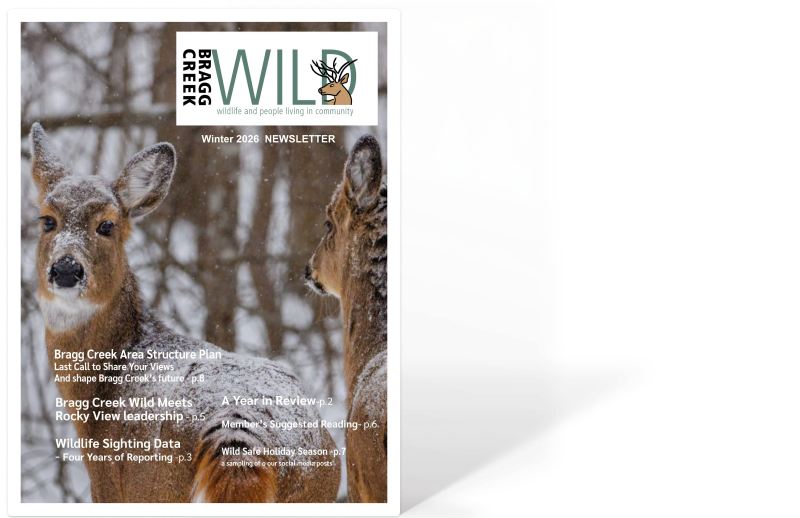
Bragg Creek Wild – A Year in Review

This past year brought momentum, challenges, and quiet progress behind the scenes. Here’s a glimpse of what Bragg Creek Wild has been up to. If you feel inspired to

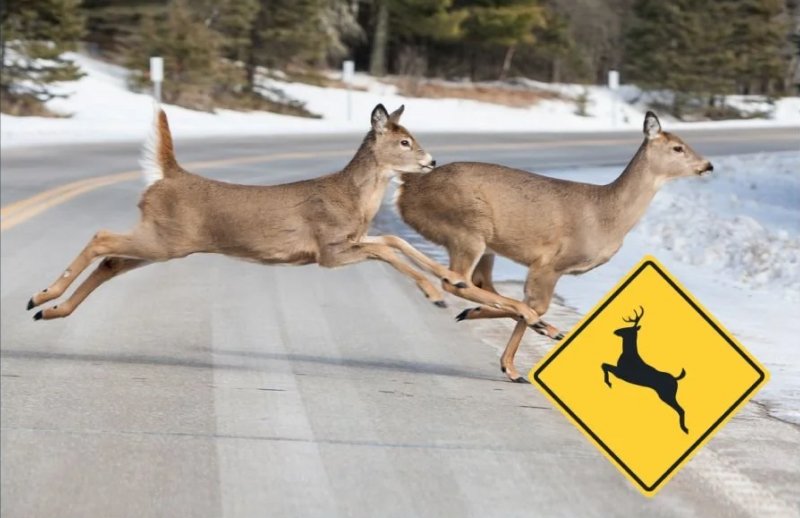
Love on the Move: A Fall Story about Wildlife and Wheels

This is the time of year when collisions between vehicles and animals increase sharply. But a few mindful habits can make all the difference.

Bragg Creek Wild Meets Rocky View County Leadership

Rocky View County’s top leadership made time to meet with Bragg Creek Wild (BCW). On the agenda: strengthening partnerships and moving closer to addressing key issues in the coming

Newsletters

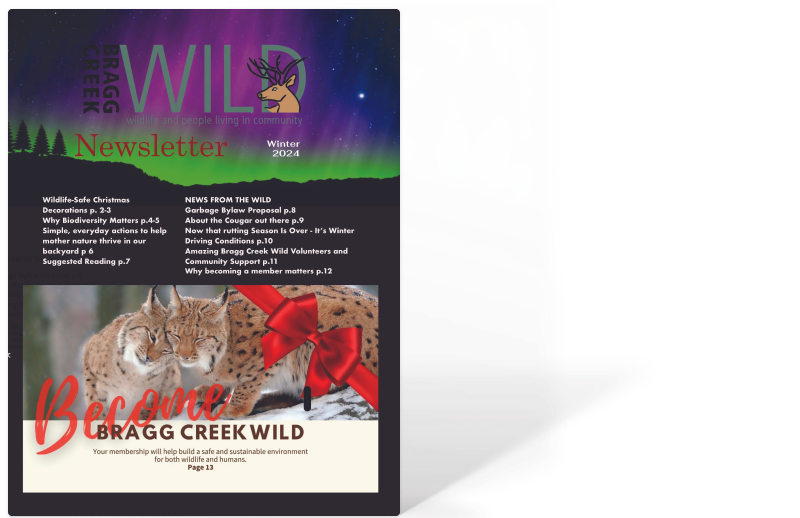
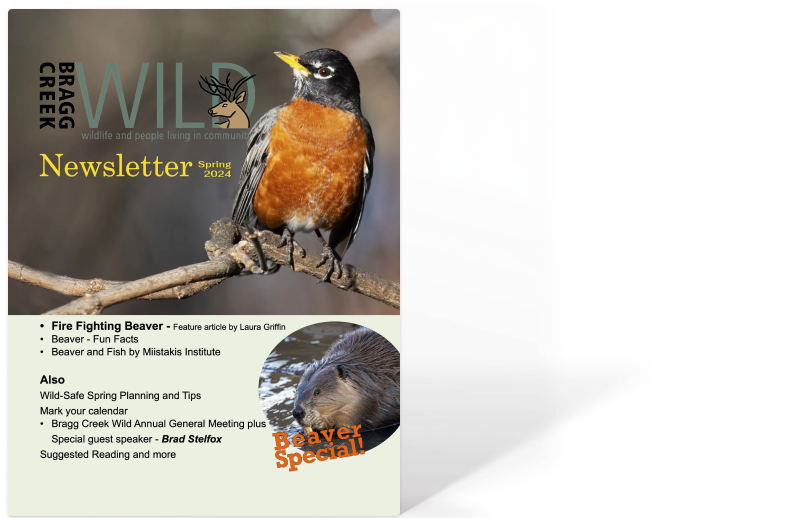
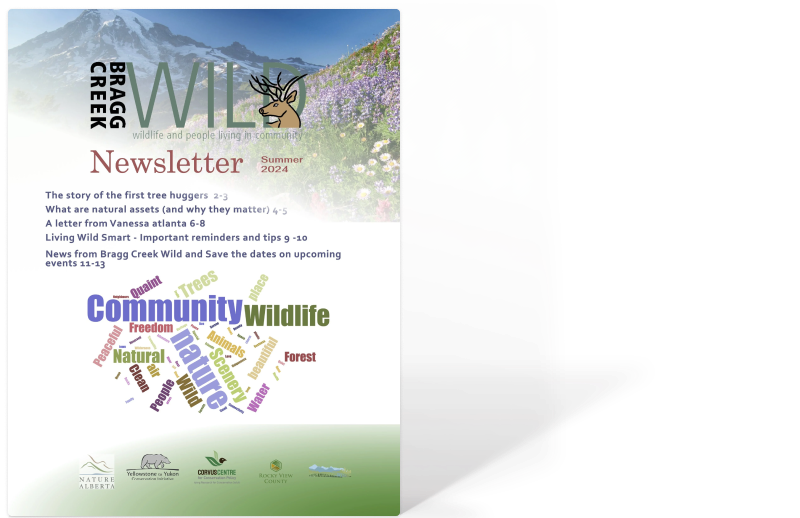
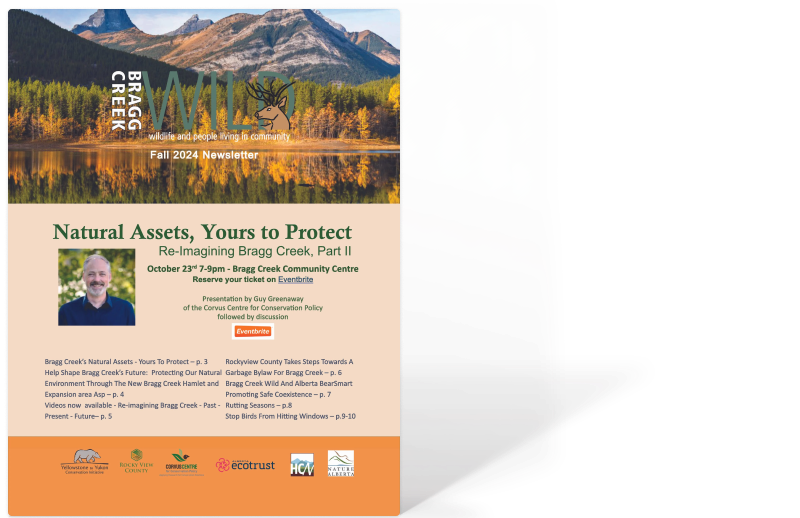
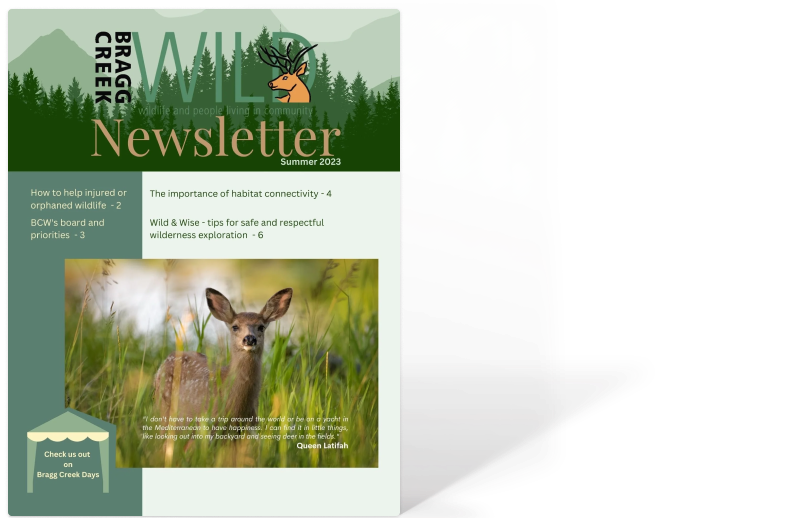
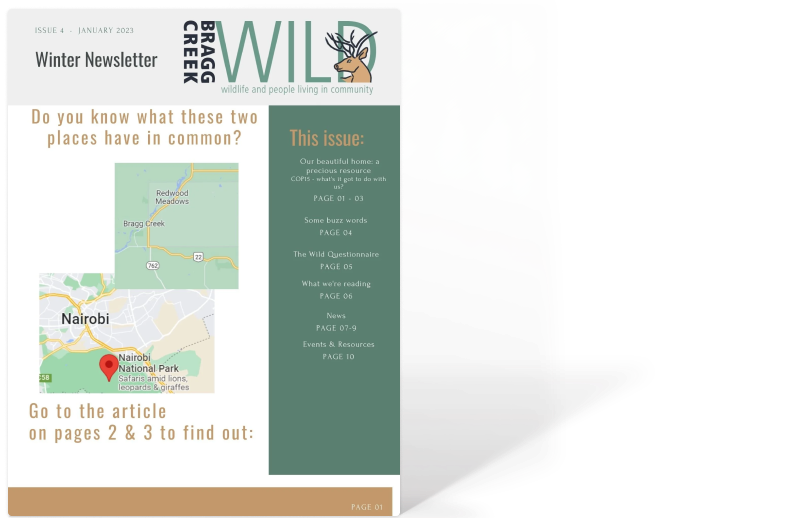
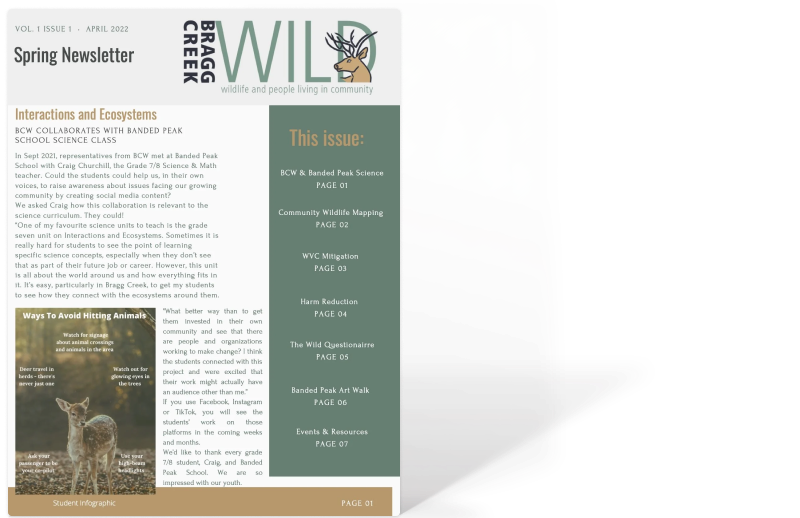
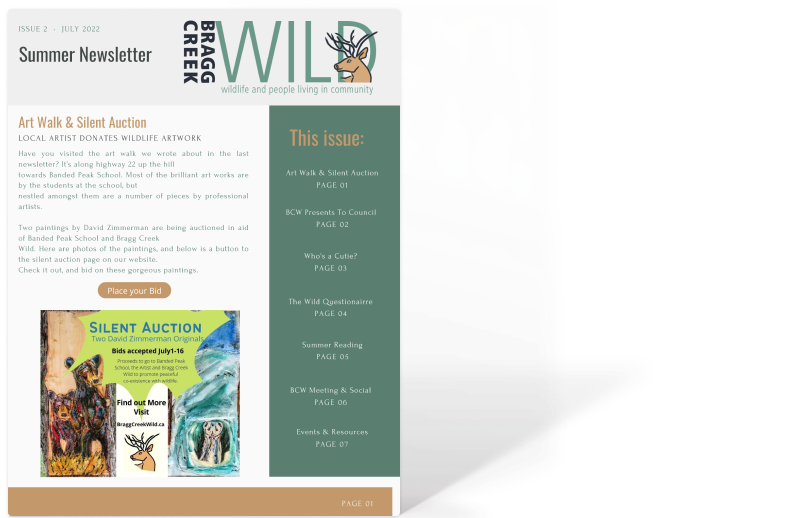
Explore our quarterly updates, including stories, events and local voices from the heart of Bragg Creek Wild.

Wild Smart

Practical guides for everyday living includes BearSmart, DeerSmart, CougarSmart, and more. Simple, actionable steps that every resident can use to reduce conflicts and protect wildlife.

Wild Living

Step-by-step actions you can take. Not sure how to secure garbage, manage fruit trees, or handle a wildlife encounter? Our “Wild how to” guides give you clear instructions.

Media

Stay informed from media coverage to Bragg Creek Wild updates, this is where you’ll find the latest stories on our initiatives, community events, and wildlife advocacy work.

Glossary

Know the language of conservation, new to terms like “wildlife corridors,” “habituation,” or “bylaw”? Our glossary breaks down key conservation and community terms in plain language, so everyone can feel confident joining the conversation.

Ecosystem

A geographic area where plants, animals, and other organisms, as well as weather and landscape, work together to form a bubble of life. In a healthy ecosystem, a wide variety of animals, plants, insects and micro-organisms are able to co-exist, supporting and interacting with each other. An example is the foothills ecosystem we have here.

The landscape on which wildlife and plants need to survive, where they can find food, shelter, where they can mate and where they can give birth. In the Bragg Creek area, we have the right kind of landscape for many wild neighbours to meet those needs. We share the landscape with bears, moose, fox, deer, cougars, coyotes, beavers, bats, crows, owls and more.

A habitat that appears to be functioning well may actually look as though it’s functioning well, but a range of problems can render it incapable of supporting native wildlife. This may be due to invasive species (like certain garden plants), pollution, certain types of development, or activities on the landscape that make wildlife move out of the area. This can lead to the disappearance of native wildlife from an area, as has happened over the years with some local elk herds.

Pathways are important corridors which wildlife must utilize to move from place to place to meet their different needs. Wildlife need to move from place to place to meet their different needs, so the pathways they use to move between locations are extremely important. Moose prefer our willow-rich wetlands, deer prefer the aspen parkland around some of our homes, and bears frequent the edges of the spruce and pine forest etc. For food, we know coyotes prefer to predate on mice and snowshoe hare, cougars prefer to feed on deer, and wolves and grizzlies prefer young and sick moose and elk - and these are found in different habitats. The animals need to move between where they prefer to live, and where they have to go to find prey.

Habitat fragmentation is the division of large natural areas into smaller, separated patches caused by events like fires and floods, or by human activities such as construction and road building. This limits wildlife movement between areas needed for food, shelter, and breeding. Natural travel routes that allow animals to move through these barriers are called corridors.

of the ecosystem and of wildlife habitat starts with knowledge of what is there, and what the local wildlife needs. Our mapping project is working towards this. We're working to locate the preferred habitats and corridors of our local wild neighbours. Without this knowledge, we can't begin to make informed decisions about the best ways forward.

The ability of an ecological system to support and maintain a community of organisms that has species composition, diversity, and functional organization comparable to those of natural habitats within a region. Wildlife has healthy habitat to thrive.

“Biodiversity is all the different kinds of life you’ll find in one area—the variety of animals, plants, fungi, and even microorganisms like bacteria that make up our natural world. Each of these species and organisms work together in ecosystems, like an intricate web, to maintain balance and support life. Biodiversity supports everything in nature that we need to survive: food, clean water, medicine, and shelter.” (World Wildlife Federation)

“Wildlife move both daily and seasonally to survive. However, the habitats animals rely on continue to be fragmented by housing, roads, fences, energy facilities, and other man-made barriers. As a result, animals are struggling more and more to reach food, water, shelter, and breeding sites.” (National Wildlife Federation)

Wildlife displacement occurs as a result of habitat loss due to habitat fragmentation, land degradation, cumulative land use, or human development. Wildlife must move away from their habitat to feed, reproduce and survive.

Refers to the overall impact of human activities on wild habitat including industry, tourism, development and recreation. Cumulative Impact can lead to habitat loss through degradation. fragmentation and "wear and tear".

Habitat loss refers to the reduction in space where a particular species, or group of species, can survive and reproduce. When an ecosystem has been dramatically changed by human activities, such as agriculture, industry, or commercial development, it may no longer be able to provide the food, water, cover, and places to raise young that wildlife need to survive.

Overtourism happens when the number of tourists or the management of the tourism industry in a destination or attraction becomes unsustainable. When there are too many visitors, the quality of life for the local community can diminish, the surrounding natural environment can be negatively affected, and the quality of the tourists' experience can decline. (Credit Treehugger)

“Tourism that takes its current and future economic, social and environmental impact, addressing the needs of visitors, the industry, the environment and host communities. End goal is to maintain healthy wildlife habitats for enjoyment over the long term.

Is the responsible travel to natural areas that conserves the environment and improves the well-being of local people.

Regeneration takes a 'whole system' approach and actually makes the environment better. It implies that we actively improve environmental and social systems to encourage an attitudinal shift by the users. It recognizes the idea that without healthy natural assets, the viability of what we hold dear will be negatively impacted, including wildlife, quality of life and even the local businesses. Examples of approaches supporting regenerative tourism include establishing “Quiet time away from humans”, providing sufficient habitat/spaces for wildlife to thrive, insuring a clean natural healthy habitat and a balanced ecosystem.

How you can support

Volunteer

Memberships

Report a sighting

Donate