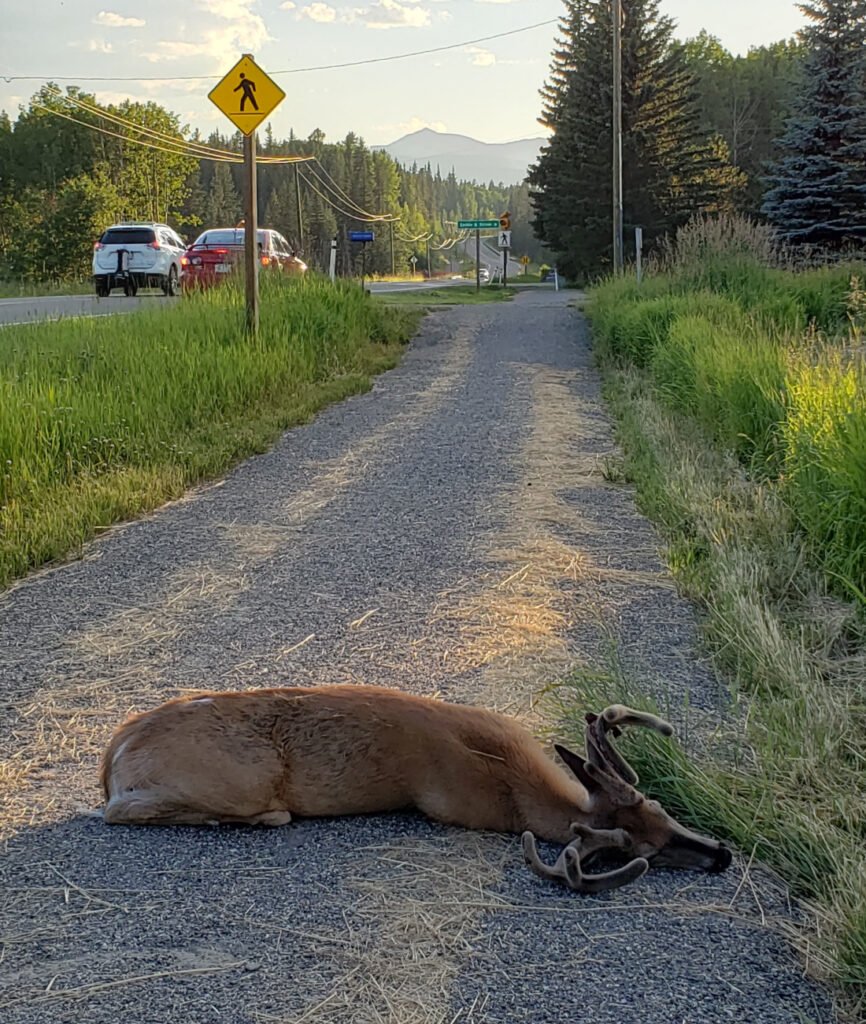
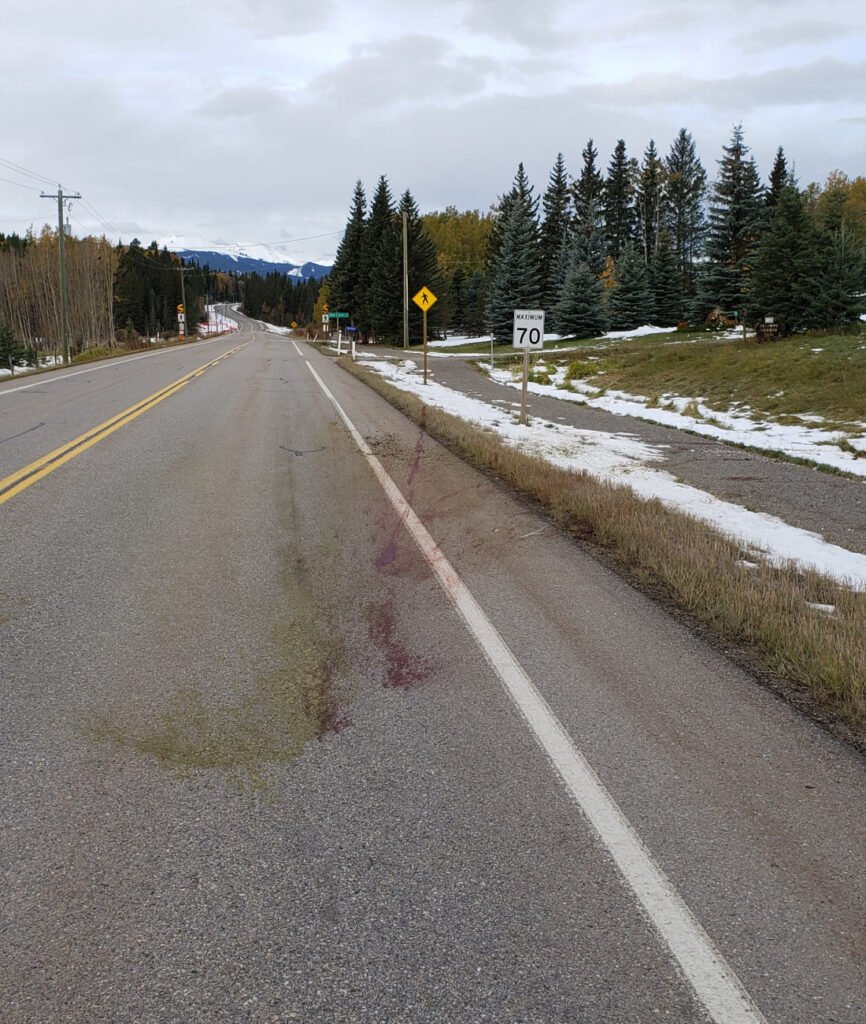
Each year, thousands of animals lose their lives on Alberta’s roads. Unfortunately, the Bragg Creek region is one of the province’s hot spots. According to the Alberta Wildlife Watch Program, in the last two years, an average of 91 animals lost their lives on our local provincial and federal roads. This number includes only those picked up by highway maintenance staff. Animals killed on the roads and not picked up by highway staff are eaten by wildlife (i.e. crows), and those that are hit but run off into the woods to die are not accounted for. According to a study by the Miistakis Institute, the actual number of wildlife-vehicle collisions is 2.8 times the official provincial statistics. In short, an estimated 255 animals die each year in our area as a result of wildlife-vehicle collisions.
Map of wildlife-vehicle collisions from 2020 to 2024 inclusively.
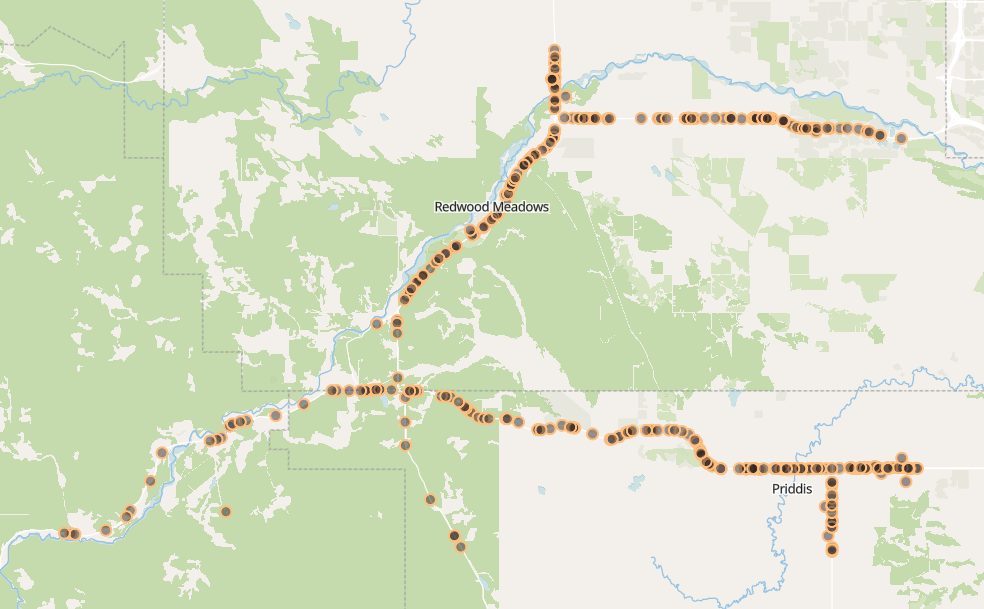
Since maintenance of county roads is the responsibility of individual municipalities, and because these local governments do not have a systematic approach to data collection, we do not have reliable information on these roads.
Only large mammals are recorded in the statistics, including bears, deer, elk, moose, horses, cows, other livestock, cats, dogs, foxes, coyotes, hawks and eagles, ducks, geese, and swans. We do have anecdotal evidence of cougars and great grey owls also falling victim to car collisions, but those were not officially recorded in provincial statistics. Anything smaller, including squirrels, mice, and small birds are not recorded.
Wildlife-vehicle collisions are a serious problem, resulting in many millions of dollars in damage and insurance claims each year, causing serious injuries and fatalities for all concerned: drivers, passengers, and wildlife alike.
Map of wildlife-vehicle collisions from 2020 to 2024 inclusively.
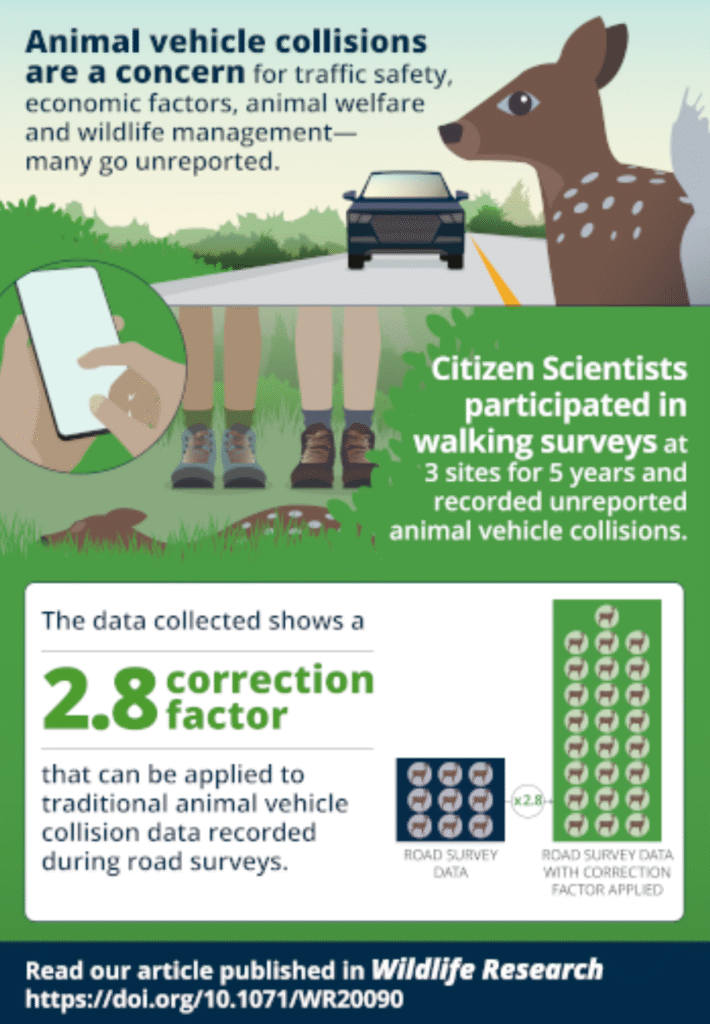
Each wildlife-vehicle collision “hot spots” is different. Geography, extent of the problem, local jurisdictions, and costs all play a role. Key strategies include lowering speeds, particularly at dawn and dusk, and installing engineered crossing structures.
Wildlife exclusion fencing
Wildlife overpasses and underpasses
Enhancing existing bridges to support wildlife passage
Trialling innovative strategies such as animal detection systems
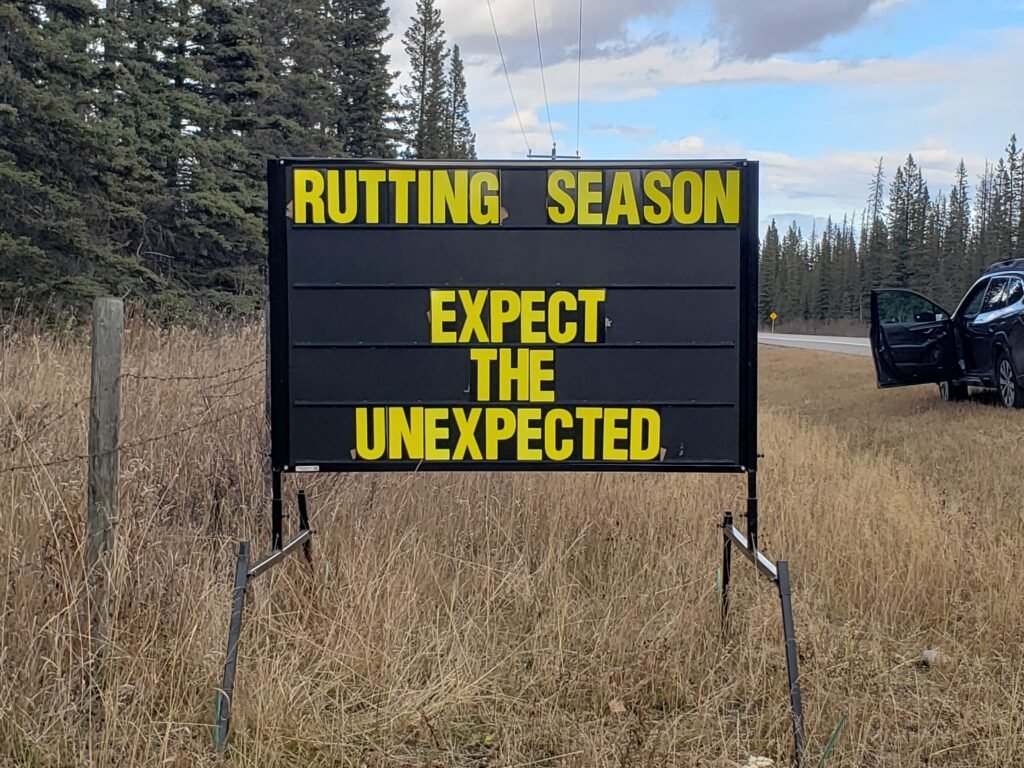
Always observe the posted speed limit and remain alert, with eyes on the ditches
Pay attention to posted signage – they indicate known frequent deer crossings
Be especially vigilant at dawn and dusk when deer are most active
Deer can jump over 3 meters! Don’t expect fencing to prevent them from crossing
Deer are herd animals. If you see one animal, reduce speed, then stop until it has safely crossed the road – then scan for the rest of the herd, especially fawns
Don’t depend on deer whistles – they are not 100% effective
In low light, dawn, dusk, and at night, deer may ‘freeze’ when overstimulated by headlights, so flash your lights on and off to help the deer recover
NEVER HONK your horn! We now understand that horns can seriously confuse the animal, causing them to run directly into your vehicle or oncoming vehicles
Be prepared for unpredictable behaviour, don’t expect the deer to cross quickly, or in a straight line
Don’t swerve out of your lane to avoid deer – use your brakes to reduce speed, and then stop. You risk a collision with another vehicle if you leave your lane