
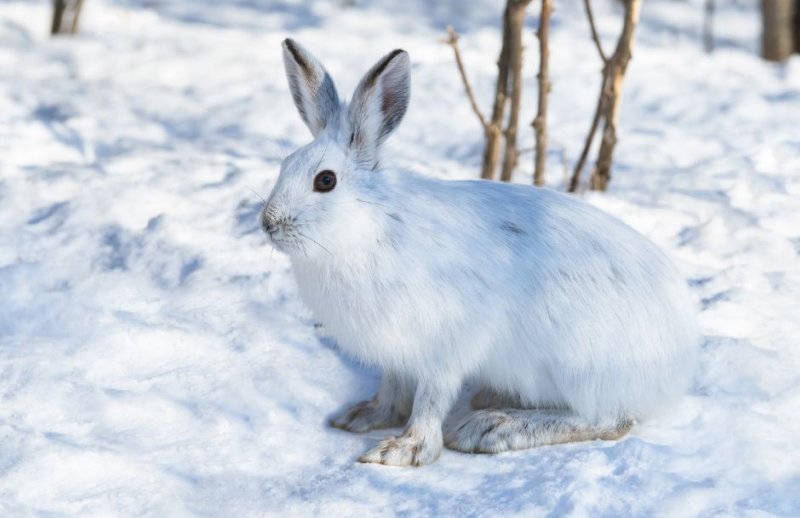
Snowshoe Hare (Lepus americanus)
In February, Snowshoe Hares are fully adapted to winter life in the foothills and forests around Bragg Creek. Their fur has turned completely white, providing excellent camouflage against the snow, while the tips of their ears remain black. Despite the cold, Snowshoe Hares are busy:
- Foraging on twigs, buds, bark, and willow shoots that remain accessible above the snow
- Creating well-worn trails in forested areas, often visible as looping track patterns in fresh snow
- Avoiding predators such as lynx, coyotes, foxes, and owls. February is a critical survival period
Their oversized, fur-covered feet act like natural snowshoes, allowing them to move easily over deep snow while predators sink. This adaptation makes February an ideal time to spot their tracks along wooded trails and creek edges.
Although breeding season begins later in spring, February is a time of energy conservation. Snowshoe Hares spend much of the day resting in sheltered “forms” under shrubs or trees, becoming more active at dawn and dusk.
Look for:
- Y-shaped tracks in the snow (large hind feet landing ahead of the smaller front feet)
- Bark stripped from young trees and shrubs
- Quick flashes of white moving through dense forest cover